Basement floor drain backing up? What it means and what to do
Diagnosing why water bubbles up from your basement floor drain, understanding main sewer lateral obstructions, and emergency clearing steps.
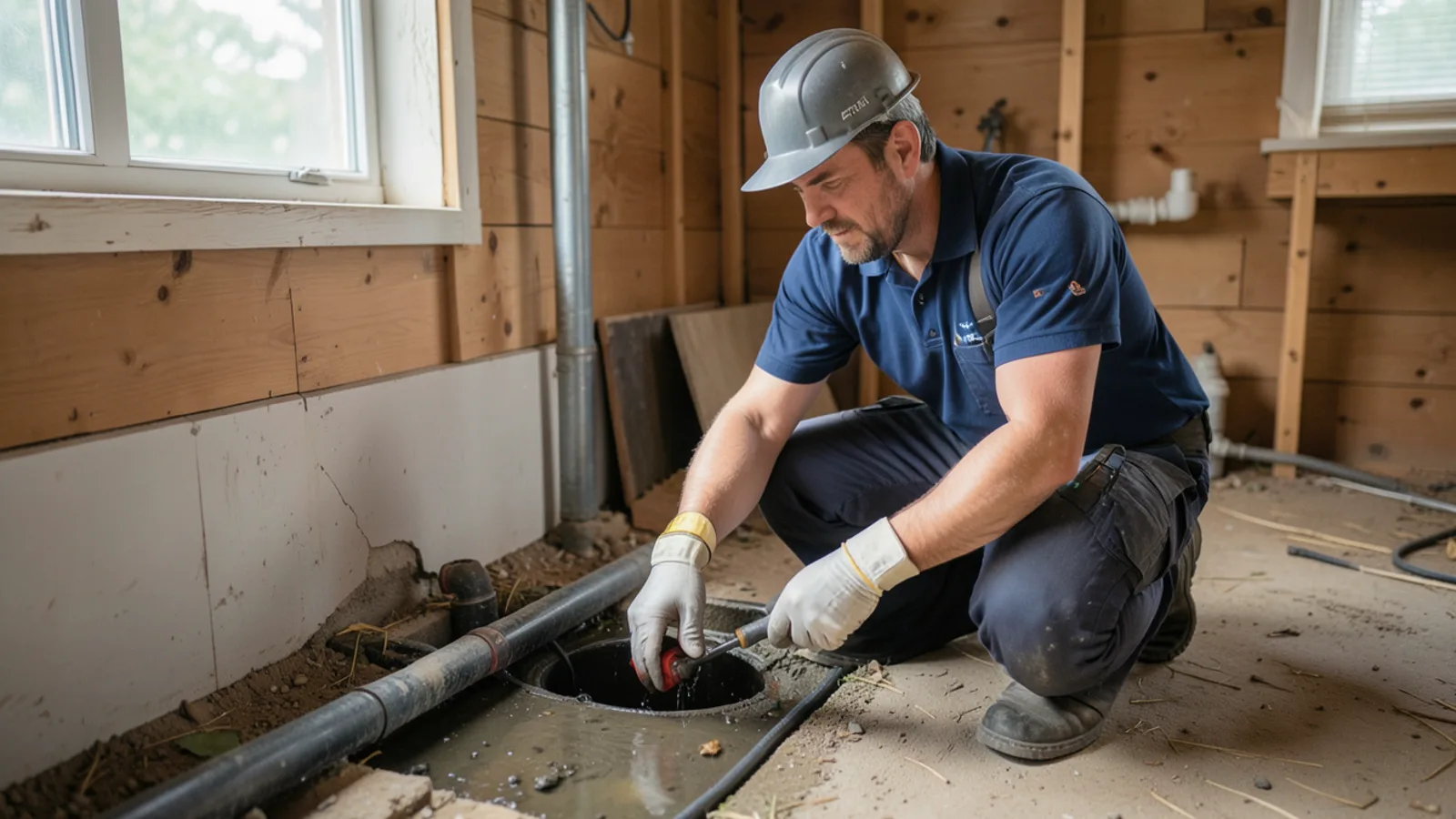
Immediate action checklist: what to do when your basement floor drain backs up
Discovering murky water or sewage bubbling up through your basement floor drain is a serious plumbing emergency that requires immediate containment.
Take these critical emergency steps right away to protect your home and family:
• Halt All Indoor Water Usage Immediately: Stop running all showers, bathtubs, washing machines, dishwashers, and sinks. Do not flush any toilets. Every gallon of water that drains from upstairs fixtures has nowhere to go and will surge directly onto your basement concrete floor.
• Keep Family and Pets Clear: Raw sewage contains biohazardous bacteria, viruses, and parasites. Avoid direct skin contact and keep children and household pets away from pooled drain water.
• Avoid Plunging or Pouring Chemicals: Plunging a basement floor drain rarely clears a deep main lateral obstruction and often forces dirty water out through adjacent basement wash basins. Never pour caustic chemical drain cleaners into a backed-up floor drain; caustic acids sit in stagnant standing water, creating hazardous fumes and burning technicians when mechanical clearing begins.
• Locate Your Main Sewer Cleanout: Identify where your main 4-inch drain exits the home foundation. Note whether the cleanout cap is on the floor, in a wall chase, or outside in the yard.
• Call for Emergency Dispatch: Contact Dale Hostetter and our experienced Cumberland Street drain cleaning specialists at (207) 419-2600 for fast, professional main sewer clearing.
Experiencing this issue in your Lebanon County home?
Call (207) 419-2600 to speak directly with our Cumberland Street plumbing team.
The hydraulics of floor drains: why trouble shows up here first
In any multi-story home or commercial building, the plumbing drainage system functions strictly by gravity. Wastewater flows downward through vertical soil stacks into the horizontal building drain beneath your concrete basement floor slab, which slopes toward the exterior sewer lateral connecting to the municipal main or septic tank.
Your basement floor drain sits at the lowest physical hydraulic elevation of the entire building. In plumbing engineering, this is known as the invert level. When a full or partial obstruction forms in the main building drain or exterior sewer lateral, wastewater can no longer exit into the street.
Because water seeks its own level, backed-up wastewater accumulates inside the vertical piping network. As water stacks upward in the pipes, the lowest opening in the network acts as a pressure relief vent. That opening is your basement floor drain. What appears to be a problem with the floor drain itself is almost always a symptom of a total downstream blockage in the four-inch main line.

The four most common causes of basement floor drain backups
Through decades of clearing drains throughout Lebanon County, our licensed technicians trace basement floor drain backups to four distinct mechanical and environmental causes:
1. Invasive Tree Root Intrusion: In established neighborhoods across Palmyra, Annville, Cleona, and Lebanon, mature oak and maple trees send hair-like feeder roots into underground sewer laterals. Older vitrified clay and cast-iron pipes have joints sealed with mortar or oakum that degrade over decades. Roots enter through micro-fractures seeking moisture and nutrients. Once inside, they flourish into dense, fibrous root balls that catch toilet paper, hair, and solid waste, choking off the pipe.
2. Solidified Fats, Oils, Grease, and Flushable Wipes: Cooking grease poured warm down kitchen sinks cools and solidifies along cold underground pipe walls. When combined with synthetic wet wipes—which do not break down in water despite marketing claims—they form dense, rock-hard obstructions known as fatbergs. These obstructions progressively narrow a 4-inch sewer line until a single heavy laundry cycle triggers a complete basement backup.
3. Karst Soil Shifting and Lateral Pipe Collapse: The limestone and dolomite geology of Lebanon County is prone to sinkholes and ground settling. As soil shifts beneath exterior sewer laterals, rigid clay or aging Orangeburg (bituminized fiber) pipes experience severe shear stress. Pipes crack, belly (sag), or offset, allowing dirt and gravel to collapse directly into the sewer channel.
4. Municipal Sewer Surges and Inflow & Infiltration (I&I): During torrential summer thunderstorms or rapid spring snowmelts, storm runoff frequently infiltrates aging municipal sanitary sewers through cracked street mains and unsealed manholes. When the municipal sewer main in the street becomes surcharged and pressurized, public sewage is driven backward through private lateral pipes, erupting through unprotected residential basement floor drains.
Floor drain backups versus dry trap sewer odors
Homeowners frequently mistake foul sewer gas smells for a physical drain backup. Understanding how a floor drain trap operates helps diagnose whether you face an active overflow or a simple maintenance issue.
Beneath the surface grate of every floor drain sits a curved plumbing fitting known as a P-trap, or in older homes, a cast-iron bell trap. This trap is designed to hold a continuous reservoir of standing water—usually two to three inches deep. This water barrier blocks methane, hydrogen sulfide, and sewer odors inside the public sewer from entering your basement.
In dry winter months or in basements with dehumidifiers, the water seal inside an infrequently used floor drain naturally evaporates over four to eight weeks. Once the water barrier dries out, sewer gas freely enters your living space, creating an odor identical to a sewage backup even though no liquid is overflowing.
If your drain smells bad but is completely dry and accepting water freely when tested, the solution is simple: pour one gallon of clean water down the drain to replenish the trap seal, followed by two tablespoons of mineral oil to slow future evaporation. If water bubbles up or fails to drain when appliances run, you have a physical obstruction requiring professional clearing.
Professional diagnosis and clearing protocol
Clearing a severe main sewer blockage requires specialized mechanical equipment and systematic diagnostics to ensure the pipe is thoroughly restored without damaging older infrastructure. We follow a strict four-step restoration protocol:
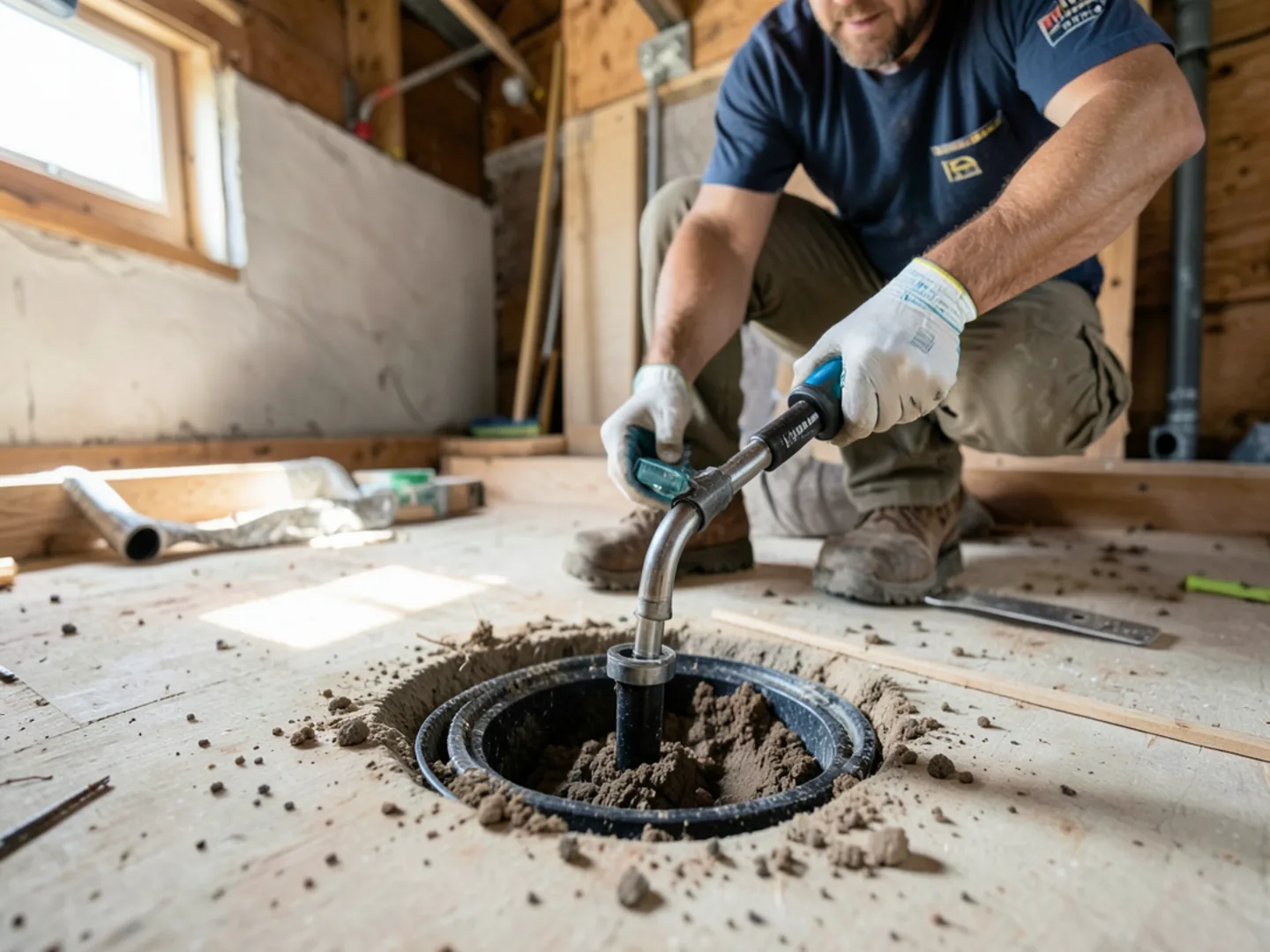
Step 1: Controlled Access and Safety Inspection. Opening a basement cleanout cap when water is backed up several feet behind it can cause a high-pressure geyser of wastewater inside your home. Our technicians carefully inspect cleanout points, relieving head pressure safely or accessing the line through outdoor yard cleanouts or roof vent stacks when necessary.
Step 2: Heavy-Duty Mechanical Snaking. We introduce industrial continuous-cable or sectional drain cleaning machines (such as RIDGID K-7500 units) outfitted with heavy-duty C-cutters, spade blades, or expanding root-saw heads. The spinning cable navigates pipe bends, cutting through dense root masses, retrieving wet wipes, and punching an opening through solid obstructions to restore baseline gravity drainage.
Step 3: High-Pressure Hydro-Jetting Restoration. While mechanical snaking punches a hole through a clog, it leaves residual grease grease cakes and root fringes clinging to pipe walls. For persistent blockages, we deploy commercial hydro-jetters that blast heated water at 3,500 to 4,000 PSI through forward-penetrating and reverse-scouring nozzles, stripping pipes clean to their original diameter.
Step 4: High-Definition Video Camera Inspection. Once flow is reestablished, we guide a self-leveling color sewer camera equipped with an integrated 512 Hz radio transmitter sonde through the entire lateral to the municipal connection. We inspect for pipe cracks, offset joints, root re-entry points, or structural bellies, recording footage and pinpointing the exact depth and yard location of any pipe defects.
Preventing future backups: backwater valves and municipal code
For long-term protection against sewer backups—especially in areas with overloaded storm or sanitary sewers—installing an automatic backwater valve provides the gold standard defense.
Under International Plumbing Code (IPC Section 715), backwater valves are required on drainage fixtures whose flood rims sit below the elevation of the next upstream municipal manhole cover. An inline backwater valve is installed directly into your horizontal main building drain beneath the basement floor.
Under normal conditions, home wastewater flows across an open internal flapper gate into the street. If the municipal sewer main surcharges and wastewater begins forcing its way backward toward your house, the reverse flow floats the flapper shut, creating an airtight, watertight mechanical barrier that completely protects your basement floor drain from municipal flooding.
Additionally, compliance with North Lebanon Township Municipal Authority (NLTMA) rules requires ensuring that basement sump pumps and rainwater downspouts are never plumbed into sanitary sewer floor drains. Diverting storm runoff away from sanitary sewers protects the entire municipal system and keeps your basement dry.
Frequently asked questions about basement floor drain backups
Q: Why does my basement floor drain back up only when I run the washing machine?
A: A modern residential washing machine discharges 15 to 30 gallons of water in just two minutes via a high-velocity electric pump. If your main sewer lateral has a partial blockage from roots or grease, the pipe can handle slow trickle flows from bathroom sinks, but cannot absorb the rapid surge from a washer pump, causing wastewater to instantly overflow at the lowest point—the basement floor drain.
Q: Can I use chemical drain cleaner to clear a backed-up floor drain?
A: No. Caustic liquid drain cleaners are formulated for minor sink clogs, not main sewer lateral obstructions located 40 to 80 feet away from your home. Pouring chemicals into standing water dilutes the product, making it completely ineffective against tree roots or grease while creating hazardous chemical conditions that can damage cast-iron pipes and burn technicians.
Q: Who is responsible for repairing the sewer line if it backs up into my basement?
A: Under municipal rules across Lebanon County (including NLTMA, City of Lebanon Authority, and local boroughs), the property owner is responsible for the entire sewer lateral from the house foundation all the way to the connection tap at the municipal main in the street. The municipality is only responsible if the public street main itself is blocked.
Q: How often should older sewer lines be cleaned or inspected to prevent backups?
A: If your home has mature trees near the sewer line or older vitrified clay piping, scheduling a preventative mechanical root cutting or hydro-jetting service every 18 to 24 months prevents root mats from reaching the critical mass that triggers an unexpected basement emergency.
Field documentation & reference photos

Related Plumbing Services & Locations
Need professional plumbing repair or advice?
Call our North Lebanon plumbers directly at (207) 419-2600 for upfront pricing.