Eliminating hard water scale in Lebanon Valley homes
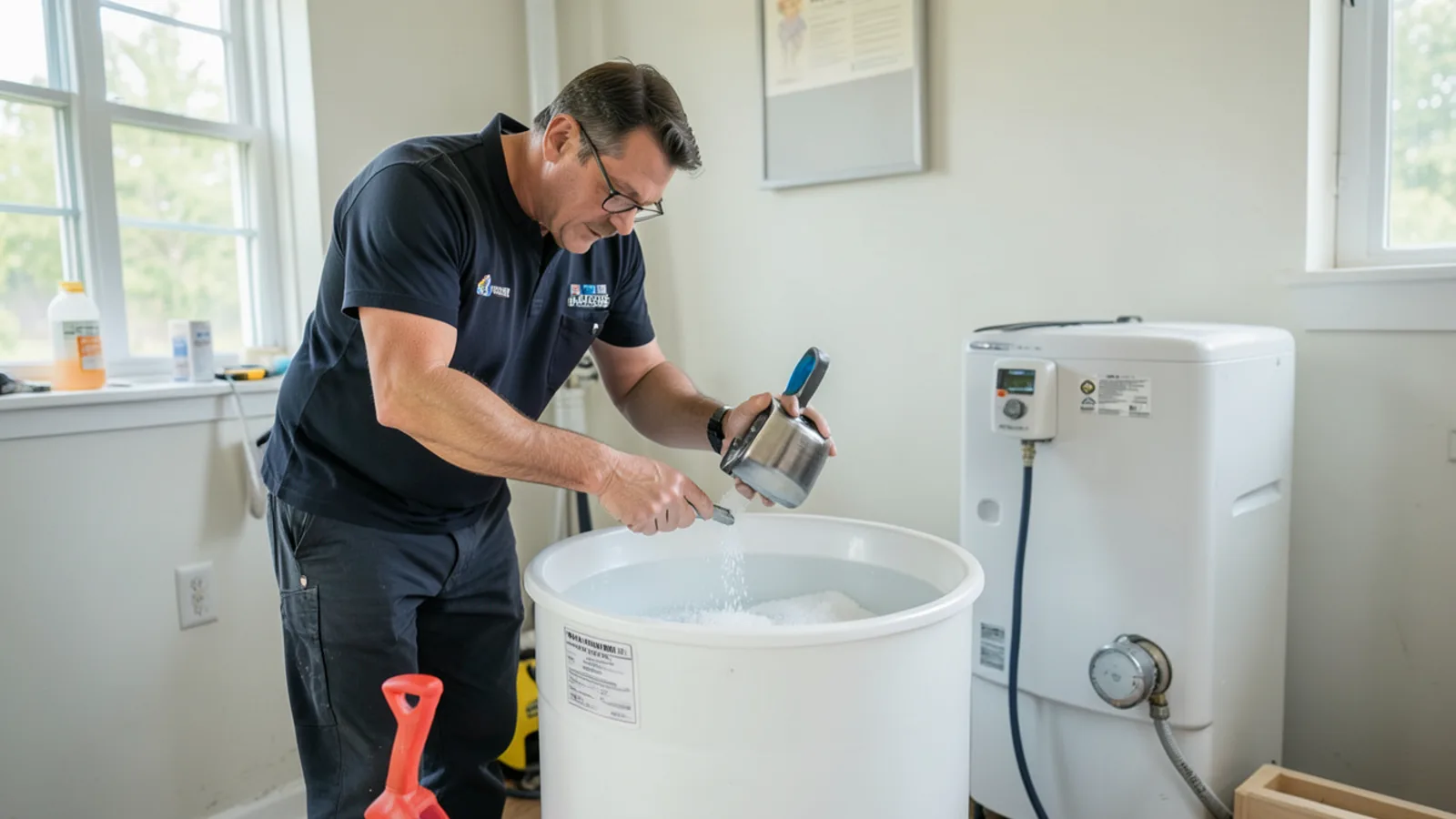
Eliminate chalky calcium buildup, extend appliance lifespans, and enjoy softer water with professional water softener installation across Lebanon County. Operating from Cumberland Street, our technicians install digital demand-metered ion-exchange softeners calibrated to local limestone water hardness with upfront flat pricing. Dispatched directly from our Cumberland Street shop in Lebanon County with upfront flat quotes and prompt local arrival.
What professional water softener installation includes in Lebanon County
Living in the limestone-rich Lebanon Valley means contending with pervasive hard water minerals that coat pipes, destroy water heaters, and ruin domestic fixtures. Operating directly from our facility at 623–627 Cumberland Street in downtown Lebanon, our technicians engineer commercial-grade water softening and whole-home filtration systems customized to your exact household water chemistry.
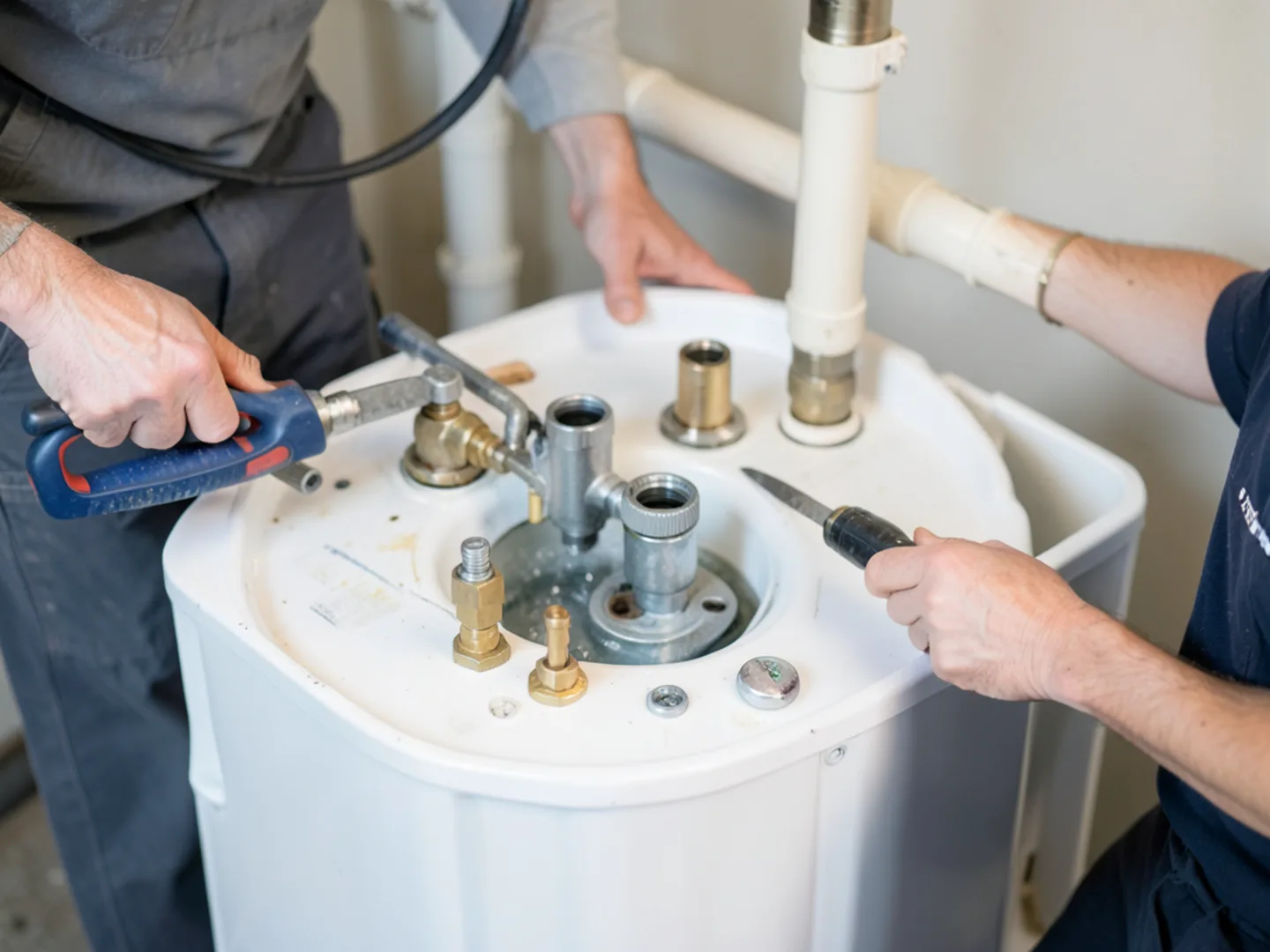
Our complete water softening platform encompasses six critical mechanical scopes: precision on-site water hardness and total dissolved solids (TDS) testing measuring exact grains per gallon; custom grain capacity sizing (ranging from 32,000 to 64,000 grain systems) based on daily household water consumption; installation of heavy-duty commercial fiberglass resin tanks loaded with premium 10% cross-linked ion-exchange resin beads; digital microprocessor demand-metered control valves (such as Fleck 5600SXT and Clack WS1) that track gallon usage and regenerate only when required; heavy-gauge polyethylene brine storage tanks equipped with safety float shutoff valves to eliminate brine overflow hazards; and rigid bypass manifold plumbing with dedicated sample ports and code-compliant air gap drain lines. Every installation begins with a comprehensive on-site water analysis and a flat upfront written quote before work begins.
Lebanon Valley karst hydrology and limestone water hardness
The Great Lebanon Valley is underlain by thick formations of soluble Ordovician and Cambrian limestone and dolomite bedrock. As atmospheric rainwater percolates downward through agricultural topsoil and limestone fissures, it dissolves substantial volumes of calcium carbonate and magnesium carbonate, carrying these dissolved minerals directly into subterranean aquifers.
According to annual Consumer Confidence Reports published by the City of Lebanon Authority and Pennsylvania American Water Company, tap water delivered to homes throughout North Lebanon Township, Annville, Palmyra, and Myerstown measures between 8 and 16 grains per gallon (140 to 270 parts per million of CaCO3). In rural areas where private wells tap directly into deep karst fissures, hardness frequently exceeds 20 to 25 grains per gallon. Water with mineral hardness above 7 grains per gallon is officially classified as hard to very hard, guaranteeing destructive mineral scale inside unsoftened residential plumbing systems.
Need water softener installation in North Lebanon Township?
Call (207) 419-2600 to discuss your plumbing repair with our Cumberland Street team.
How hard water destroys residential plumbing systems and appliances
Hard water creates continuous mechanical friction and thermal inefficiency across your entire home. When mineral-laden water is heated inside a tank or tankless water heater, calcium carbonate precipitates out of solution as rock-hard calcite scale. A mere one-eighth-inch layer of scale coating a heating element increases electrical or gas energy consumption by up to twenty-five percent and leads to premature element failure.
Beyond water heaters, mineral scale deposits restrict internal pipe diameters, ruin ceramic disc shower cartridges, cause toilet fill valves to stick open, etch glassware in dishwashers, and leave stubborn chalky rings on porcelain tubs and chrome faucets. Dissolved minerals also chemically bind with soap and detergent molecules, reducing lathering efficiency by up to seventy-five percent while leaving laundry stiff and skin irritated after bathing.

How ion-exchange water softening works: grain capacity and metered valves
True water softening requires chemical ion exchange, which cannot be duplicated by magnetic descalers or electronic wire wraps. Inside a commercial ion-exchange softener, hard water flows downward through a pressurized fiberglass vessel packed with millions of microscopic, negatively charged polystyrene resin beads saturated with sodium or potassium ions.
Because calcium and magnesium ions carry a stronger positive electrical charge than sodium, the resin beads attract and trap the mineral ions, releasing harmless sodium ions into the water stream in exchange. We calculate household grain capacity using a precise formula: household members multiplied by 75 gallons per day, multiplied by grains per gallon of hardness, multiplied by seven days between regeneration cycles. Modern demand-metered valves monitor water meters digitally, initiating backwash and brine recharge cycles only when resin capacity is exhausted, conserving salt and water compared to outdated timer-based softeners.
Our 6-step water softener installation and calibration procedure
Our Cumberland Street plumbing team follows a strict 6-step installation procedure to ensure maximum softening efficiency and complete code compliance.
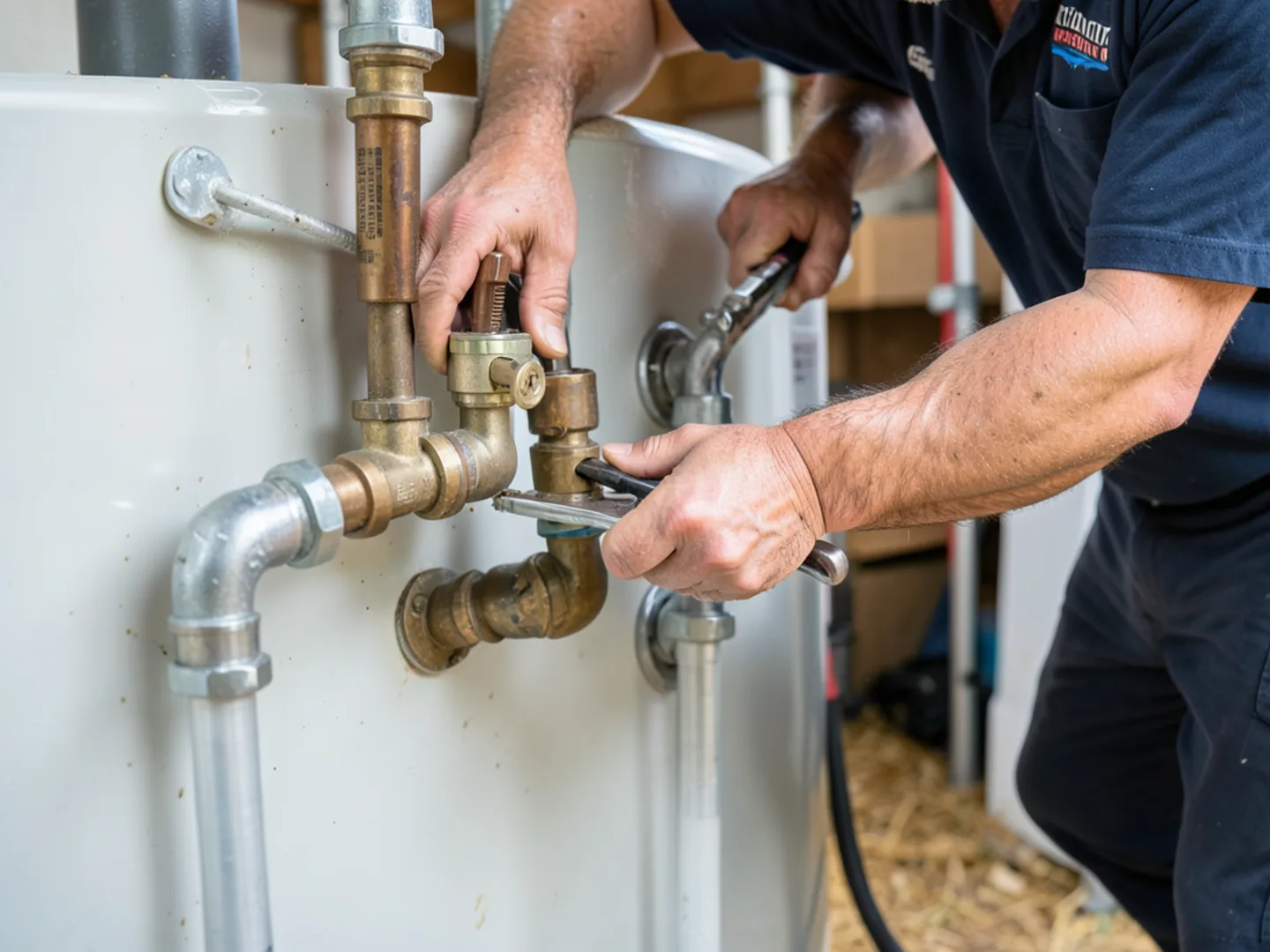
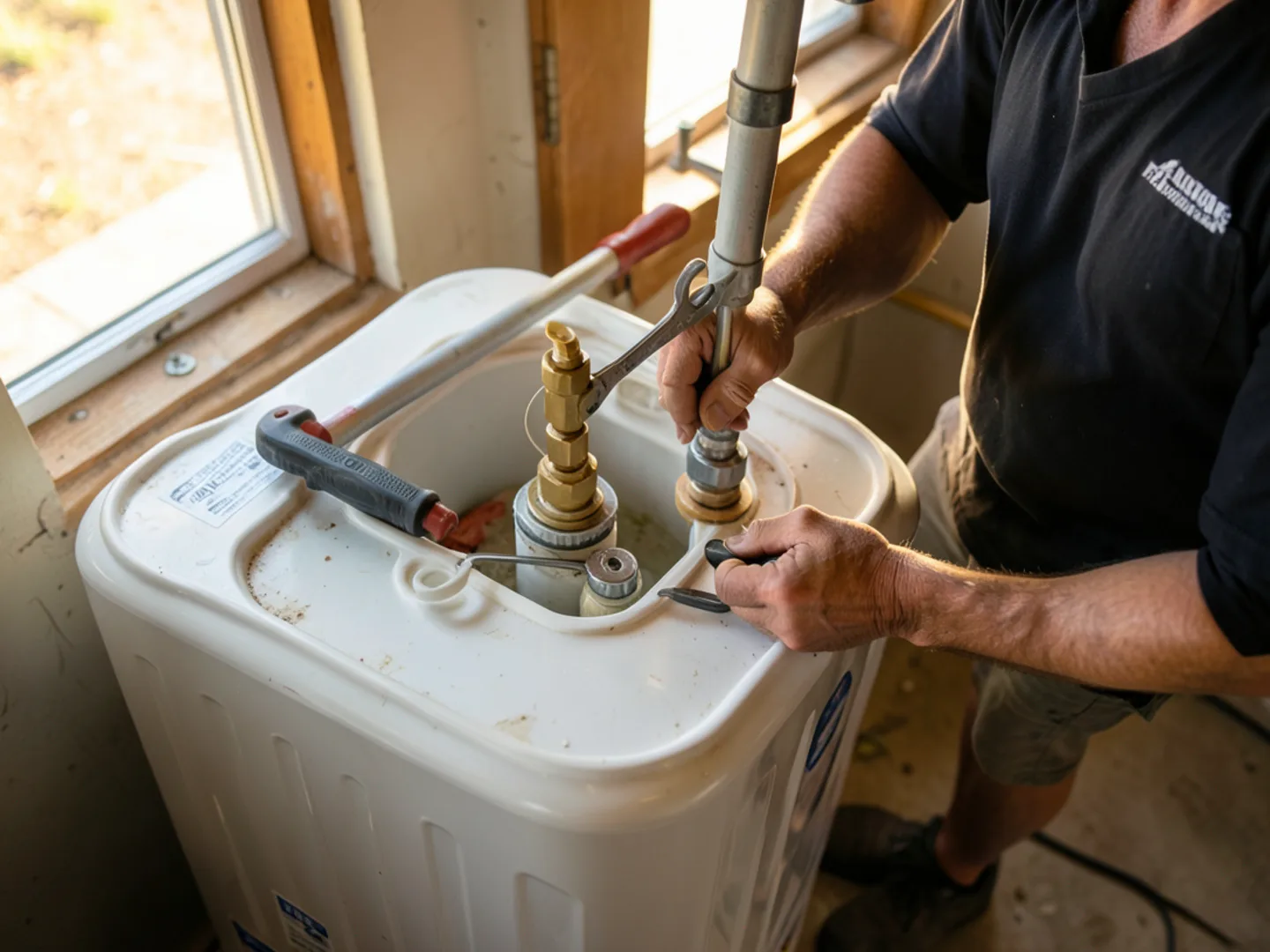
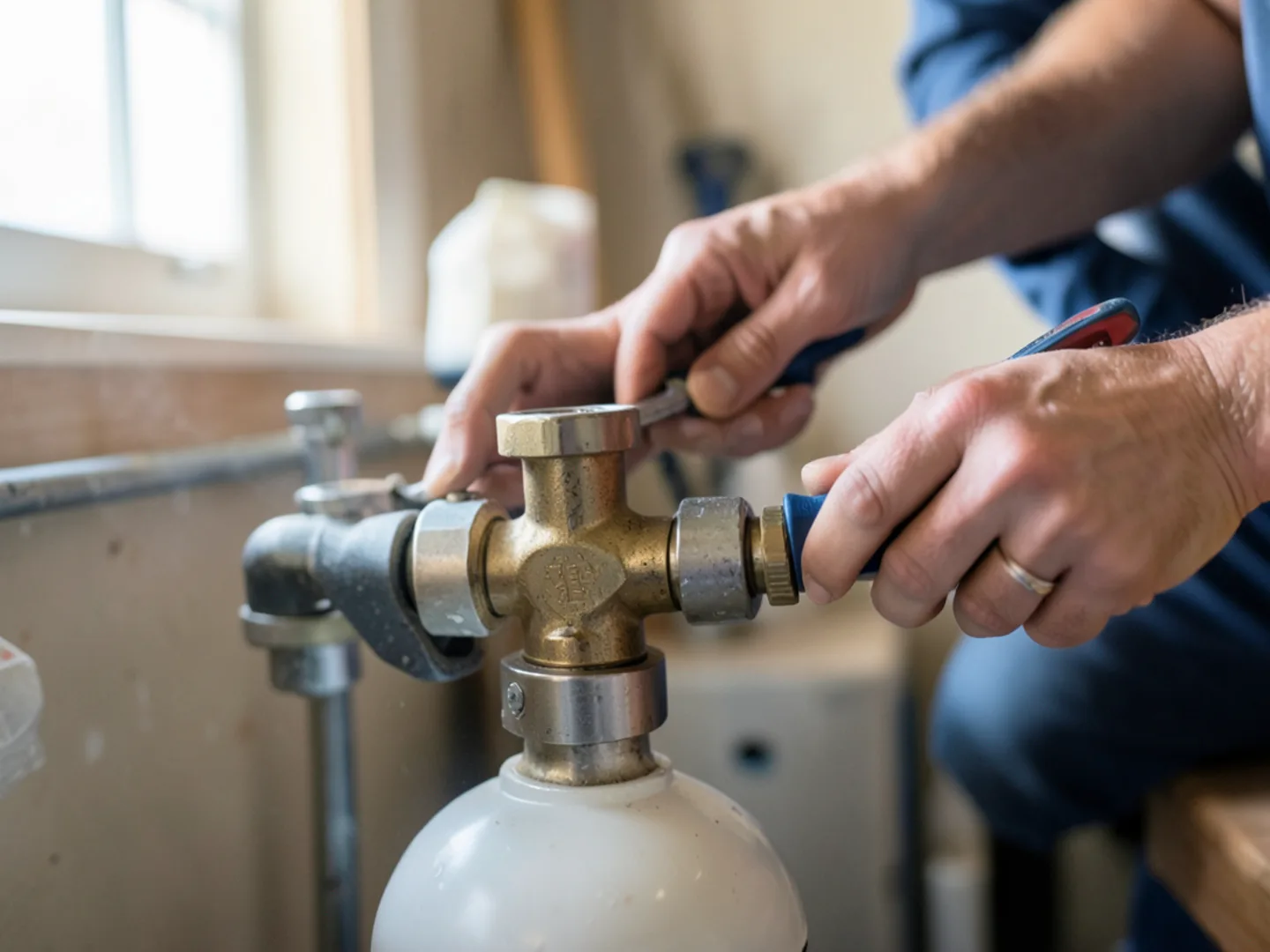
Step 1: We conduct an on-site water test using digital titration to measure exact grains of hardness, dissolved iron, pH, and chlorine levels. Step 2: We select the primary water supply trunk immediately downstream of the municipal meter or well pressure tank (prior to branch lines feeding water heaters), creating a dedicated bypass loop using Type L copper or Uponor PEX-a tubing. Step 3: We assemble full-port three-valve bypass manifolds, allowing homeowners to isolate the softener for garden hose spigots or yard irrigation without interrupting household water flow. Step 4: We load the mineral tank with high-purity gravel underbedding and 10% cross-linked resin, position the brine tank, and connect heavy-duty brine suction tubing with an internal air check safety assembly. Step 5: We route the regeneration backwash discharge line to an approved floor drain, utility sink, or sump basin, securing an IPC-compliant physical air gap fitting to eliminate any potential cross-contamination backflow. Step 6: We program the digital control valve with your specific hardness parameters, load high-purity solar salt pellets, initiate an initial manual regeneration cycle, and test treated water at kitchen and bathroom fixtures to verify zero grains of residual hardness.
Cost factors for water softener installation in Lebanon County
The total investment for a professional water softener installation in Lebanon County depends on several site-specific mechanical considerations: the required grain capacity (32,000 grains for smaller households up to 64,000 grains for large homes with high hardness); the brand and type of electronic control valve (standard digital metered vs dual-tank alternating systems providing uninterrupted softened water); and whether pre-filtration is required.
If incoming water contains chlorine from municipal disinfection or dissolved clear-water iron from private wells, we often integrate an upstream catalytic carbon filter or dedicated iron filter. Plumbing modifications—such as installing a new dedicated drain line, creating an electrical outlet, or repiping basement branches to separate outdoor sillcocks—are clearly detailed. We evaluate your basement layout in person and present a clear, flat upfront written quote with zero hidden trip fees.
Plumbing codes, air gap requirements, and brine discharge guidelines
Water softener installations must comply strictly with the Pennsylvania Uniform Construction Code (34 Pa. Code Ch. 403) and the International Plumbing Code (IPC) Chapter 6. Under IPC Section 608.16, water softener discharge lines must never be connected directly to a sanitary sewer pipe or drain.
An indirect connection with a code-mandated physical air gap (minimum of two inches above the flood level rim of the receiving drain receptor) is legally required to prevent sewage wastewater from siphoning back into the drinking water resin bed during a municipal sewer backup. Additionally, under North Lebanon Township Municipal Authority guidelines, brine regeneration discharge must be directed to approved drainage fixtures that comply with local municipal wastewater regulations. Our technicians ensure every line, valve, and air gap fitting satisfies municipal inspection standards.
Why Lebanon County homeowners trust our Cumberland Street team
Correctly treating hard limestone water demands professional water chemistry analysis, accurate hydraulic sizing, and clean plumbing craftsmanship. Operating directly from our shop at 623–627 Cumberland Street along Route 422, our service technicians serve families across North Lebanon Township, Cleona, Annville, Palmyra, and Myerstown.
We are registered Pennsylvania home improvement contractors (PA HIC #PA-184920) led by Master Plumber Dale Hostetter. We avoid proprietary, locked-down retail softeners that require expensive service contracts. Instead, we install open-platform commercial systems built with industry-standard Clack and Fleck valves whose parts are universally available. Backed by upfront written quotes, solid workmanship warranties, and clean drop-cloth protection, we protect your plumbing from destructive mineral scale.
Job site documentation & mechanical procedures
Frequently asked questions about water softener installation
Local Pennsylvania code, diagnostic methods, and service details.
Need immediate help with water softener installation?
Speak directly with our North Lebanon plumbing specialists at (207) 419-2600.