Hard water in the Lebanon Valley and what it does to your heater and fixtures
In-depth guide to limestone water chemistry in Lebanon County, why water heaters fail prematurely from mineral scaling, and how ion-exchange water softeners protect your home plumbing.
Quick summary: Lebanon Valley water hardness guide
If you live in Lebanon County, your household plumbing deals with some of the most mineral-dense water in the Commonwealth of Pennsylvania. Municipal water reports and rural private well tests consistently reveal hardness concentrations ranging between 8 and 18+ grains per gallon (gpg)—classifying regional water as hard to severely hard.
Here are the core facts every Lebanon County homeowner should know:
• Hardness Classification: Standard soft water measures under 1.0 gpg. Water in Lebanon, Palmyra, and Annville averages 10 to 14 gpg, while Myerstown, Schaefferstown, and rural wells often exceed 18 to 22 gpg.
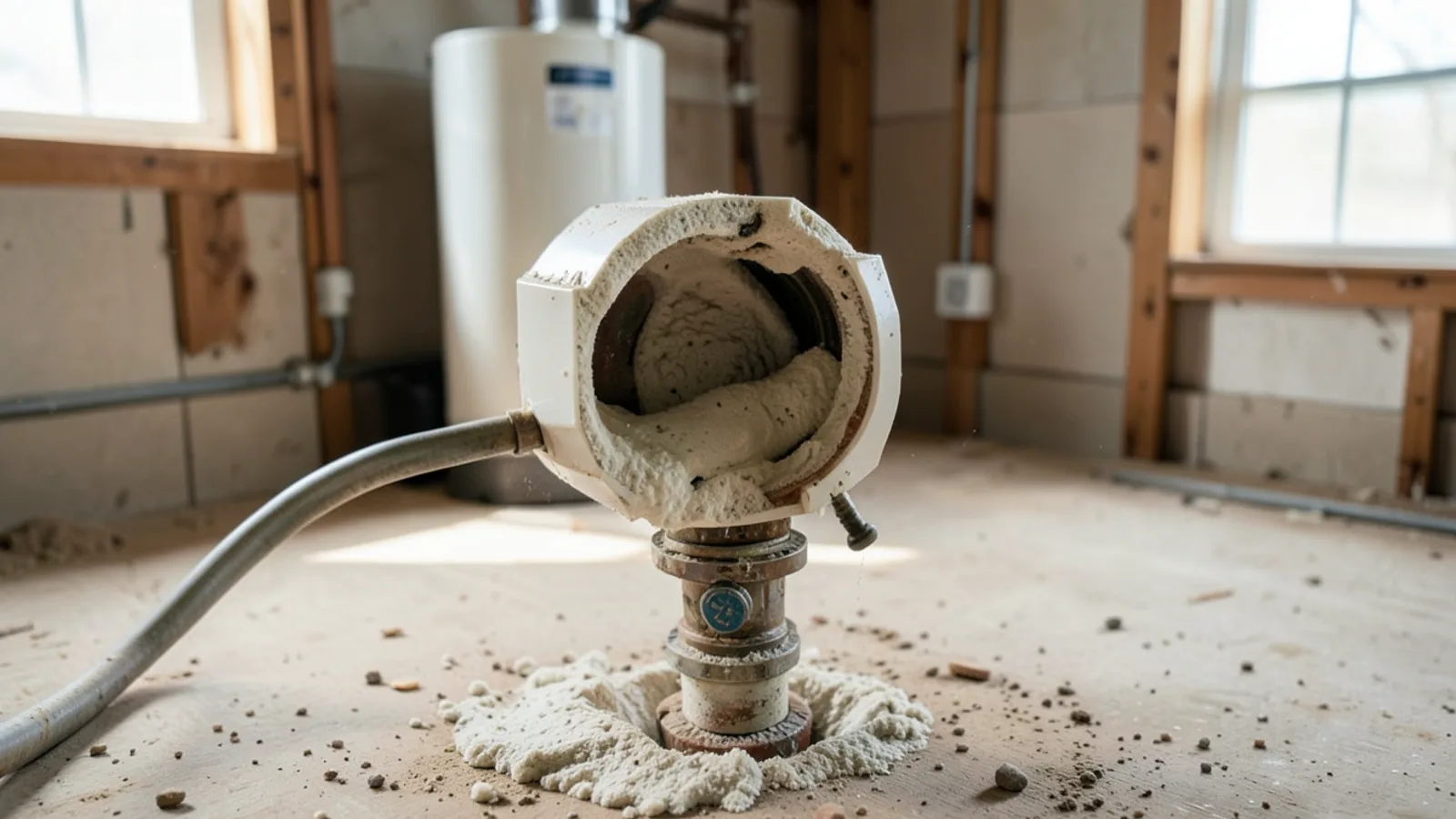
• Retrograde Solubility: Calcium carbonate does not dissolve better in hot water; it precipitates out of solution as water temperature rises, depositing limestone rocks directly onto heating elements and tank bottoms.
• Premature Water Heater Failure: Unsoftened water cuts conventional water heater lifespan in half, causing lower heating efficiency, high energy bills, and noisy popping boiling sounds.
• Fixture Scouring: Mineral grit scores ceramic disc faucet cartridges, clogs showerhead aerators, and etches glassware.
• Effective Solutions: Only whole-house ion-exchange water softeners physically extract calcium and magnesium ions from supply lines, delivering true 0-grain soft water that halts scale damage completely.
To test your water hardness or install a precision-metered water softener, call Dale Hostetter and our plumbing team at (207) 419-2600.
Experiencing this issue in your Lebanon County home?
Call (207) 419-2600 to speak directly with our Cumberland Street plumbing team.
The geological origins of Lebanon County hard water
The exceptional agricultural productivity of the Great Lebanon Valley is intimately linked to its underlying geology: vast subterranean formations of soluble limestone (calcium carbonate, CaCO3) and dolomite (calcium magnesium carbonate, CaMg(CO3)2). While these minerals create rich topsoil for farms, they create severe mechanical headaches for residential plumbing networks.
The process begins with atmospheric precipitation. As raindrops fall through the air and filter through decomposing organic topsoil, water absorbs carbon dioxide (CO2), creating a mild solution of carbonic acid (H2CO3). As this slightly acidic rainwater percolates through bedrock fissures and sinkhole conduits into regional aquifers, it dissolves the surrounding limestone and dolomite rock.
By the time water enters municipal water authority intake wells or private residential well casings, it carries an enormous dissolved mineral load. A standard family of four consuming 200 gallons of 15-grain unsoftened water daily introduces nearly 150 pounds of dissolved rock into their household plumbing system each year.
Municipal water providers—including the City of Lebanon Authority, Pennsylvania American Water, and the Myerstown Water Authority—treat drinking water to ensure complete biological safety under Pennsylvania DEP standards. However, municipal filtration cannot remove dissolved mineral ions without expensive reverse osmosis facilities, leaving water softening as the direct mechanical responsibility of the individual homeowner.

The thermal physics of scale: retrograde solubility inside heaters
Most chemical substances dissolve more readily as liquid temperatures increase. Calcium carbonate is an anomaly; it exhibits retrograde solubility, meaning its solubility decreases as water temperature climbs.
When cold municipal or well water enters your water heater and contacts hot surfaces, dissolved calcium and magnesium ions instantly bond together into microscopic calcite crystals. These crystals adhere to the hottest surfaces available in the system:
• Electric Water Heaters: Scale jackets coat the upper and lower immersion heating elements. Because calcium carbonate is an effective thermal insulator, a 1/8-inch layer of scale prevents heat from dissipating into the water. Element internal copper cores overheat to over 1,000 degrees Fahrenheit, causing rapid element burnout.
• Gas Water Heaters: Calcite crystals settle across the concave steel bottom directly above the gas burner flame. Trapped water pockets beneath the sediment layer boil violently, generating loud knocking, popping, and rumbling noises known as kettling. Over time, the uneven thermal stress fatigues the steel tank bottom, causing catastrophic tank rupture.
• Tankless Water Heaters: High-temperature copper or stainless steel heat exchanger tubes feature narrow water passages. Mineral scale restricts water velocity, causing heat exchanger overheating error codes, sudden cold water sandwiches in the shower, and premature component failure.
Fixture devastation: cartridges, aerators, and appliances
The destructive impact of hard water extends well beyond the utility room into every room of your residence:
• Faucet Cartridges: Single-handle kitchen and bathroom faucets utilize micro-polished ceramic discs to throttle water flow. Microscopic calcium scale crystals act like abrasive grinding grit, scoring smooth ceramic plates and tearing neoprene O-rings, leading to continuous fixture dripping.
• Aerators and Showerheads: Tiny aerator mesh screens capture precipitating mineral particles. Showerhead spray nozzles become choked with white rock, creating uneven spray fans, reduced flow volume, and high internal backpressure.
• Toilet Flappers and Fill Valves: Mineral encrustation coats the bottom lip of flush valve seats, preventing rubber flappers from forming watertight seals and producing ghost flushing. Toilet bowl siphon jets and rim holes calcify, resulting in weak, sluggish flushes.
• Dishwashers and Laundry: Hard water ions chemically react with soap fatty acids, neutralizing cleaning detergents and producing insoluble soap curd. This curd coats glassware in permanent cloudy haze, dulls clothing fibers, and leaves stiff residues on bath towels.
Comparing treatment options: ion exchange versus conditioners
Homeowners evaluating water treatment options encounter conflicting claims regarding salt-free conditioners versus traditional salt-based softeners. Understanding the mechanical differences is essential:
• Salt-Based Ion-Exchange Softeners: The industry benchmark for permanent scale defense. Water passes through a pressure tank filled with millions of microscopic polystyrene resin beads charged with sodium or potassium ions. Through electrostatic attraction, resin beads capture hard calcium and magnesium ions and release harmless sodium ions in exchange. When resin becomes exhausted, a digital control valve flushes the bed with brine solution. Ion-exchange softeners reduce hardness to less than 1.0 grain per gallon, stopping scale formation completely and gradually dissolving existing mineral deposits inside plumbing pipes.
• Template-Assisted Crystallization (TAC) Conditioners: Marketed as salt-free systems, TAC units do not extract calcium or magnesium minerals from the water. Instead, specialized media causes dissolved ions to cluster into microscopic inert crystals that stay suspended in the flow. While TAC systems reduce scale adhesion on flat pipe walls, they do not soften water, do not eliminate soap curd, and do not remove spots on glassware or shower glass.
• Polyphosphate Scale Inhibitors: Frequently used on tankless water heater supply lines, polyphosphate cartridges slowly dissolve food-grade polyphosphate into the water, sequestering mineral ions to prevent crystal bonding. These are effective supplementary defenses for isolated appliances but require frequent cartridge replacements and do not protect the entire household.
Practical testing and water heater descaling maintenance
To protect your home before mineral damage becomes irreversible, our master plumbers recommend three practical maintenance steps:
1. Calibrated Chemical Hardness Testing: Avoid relying on vague color dip strips. Use a precision drop-count chemical titration test kit (such as a Hach 5-B kit) to measure exact grains per gallon of total hardness in both your untreated raw supply and your treated indoor lines.
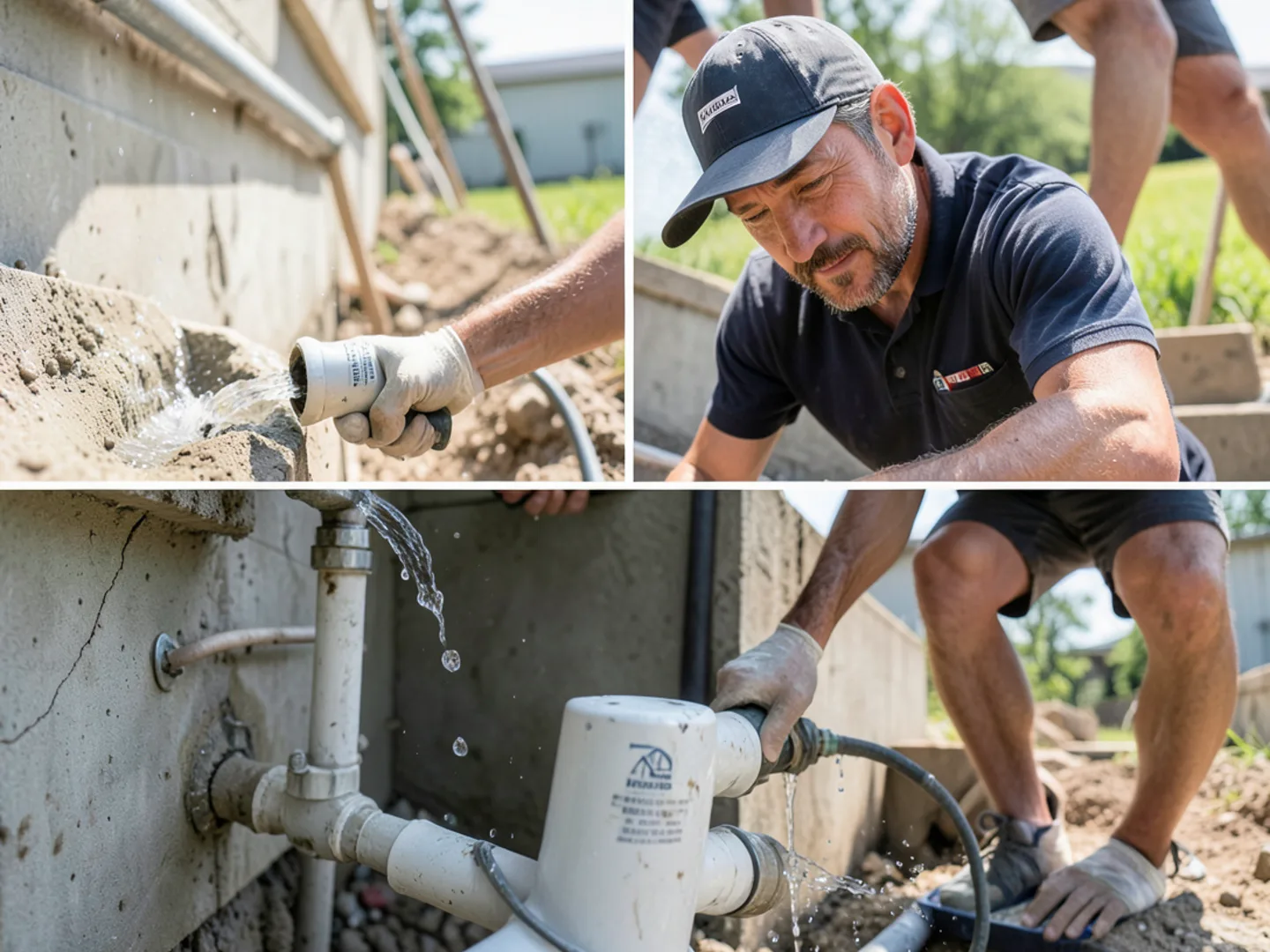
2. Annual Tank Water Heater Flushing: Connect a garden hose to the water heater bottom drain valve, shut off power or gas, and flush accumulated sediment out of the tank until water runs crystal clear. Installing a full-port brass ball valve in place of the standard factory plastic drain cock allows heavy sediment chunks to exit freely.
3. Tankless Citric-Acid Circulation: Circulate food-grade citric acid or virgin white vinegar through tankless heat exchanger isolation service valves using a submersible utility pump for sixty minutes annually to dissolve internal scale before copper passages become occluded.
Frequently asked questions about Lebanon Valley hard water
Q: Does boiling water remove limestone hardness?
A: Boiling water removes temporary hardness (bicarbonates) by forcing minerals to precipitate into chalky flakes, but it leaves permanent hardness (sulfates and chlorides) behind and concentrates the mineral load as water evaporates. Boiling is completely impractical for whole-home water treatment.
Q: Does soft water add dangerous levels of sodium to my drinking water?
A: Ion exchange adds a negligible amount of sodium. For water with 15 grains per gallon of hardness, softening adds approximately 112 milligrams of sodium per quart of water—comparable to the sodium content in a single slice of white bread. Homeowners on strict low-sodium diets can regenerate their system with potassium chloride pellets or install an under-sink reverse osmosis system for drinking water.
Q: How do I know when my water heater is severely scaled up?
A: Classic indicators include loud rumbling, popping, or tea-kettle sounds coming from the tank during heating, hot water running out much faster than it used to, rust-tinted water at the bottom of the tank, and a temperature-and-pressure relief valve that drips intermittently.
Q: Can hard water cause copper pipes to leak in Lebanon County?
A: Indirectly, yes. Heavy mineral deposits create localized galvanic corrosion cells beneath scale crusts, accelerating pitting corrosion. Additionally, hard water causes homeowners to turn up heater temperatures to compensate for scale insulation, accelerating thermal pipe stress.
Field documentation & reference photos

Related Plumbing Services & Locations
Need professional plumbing repair or advice?
Call our North Lebanon plumbers directly at (207) 419-2600 for upfront pricing.