
Checking your sump pump before the spring thaw in Lebanon County
Complete late-winter homeowner checklist to test, inspect, and maintain your basement sump pump before spring snowmelt and heavy rainfall saturate Lebanon County limestone aquifers.
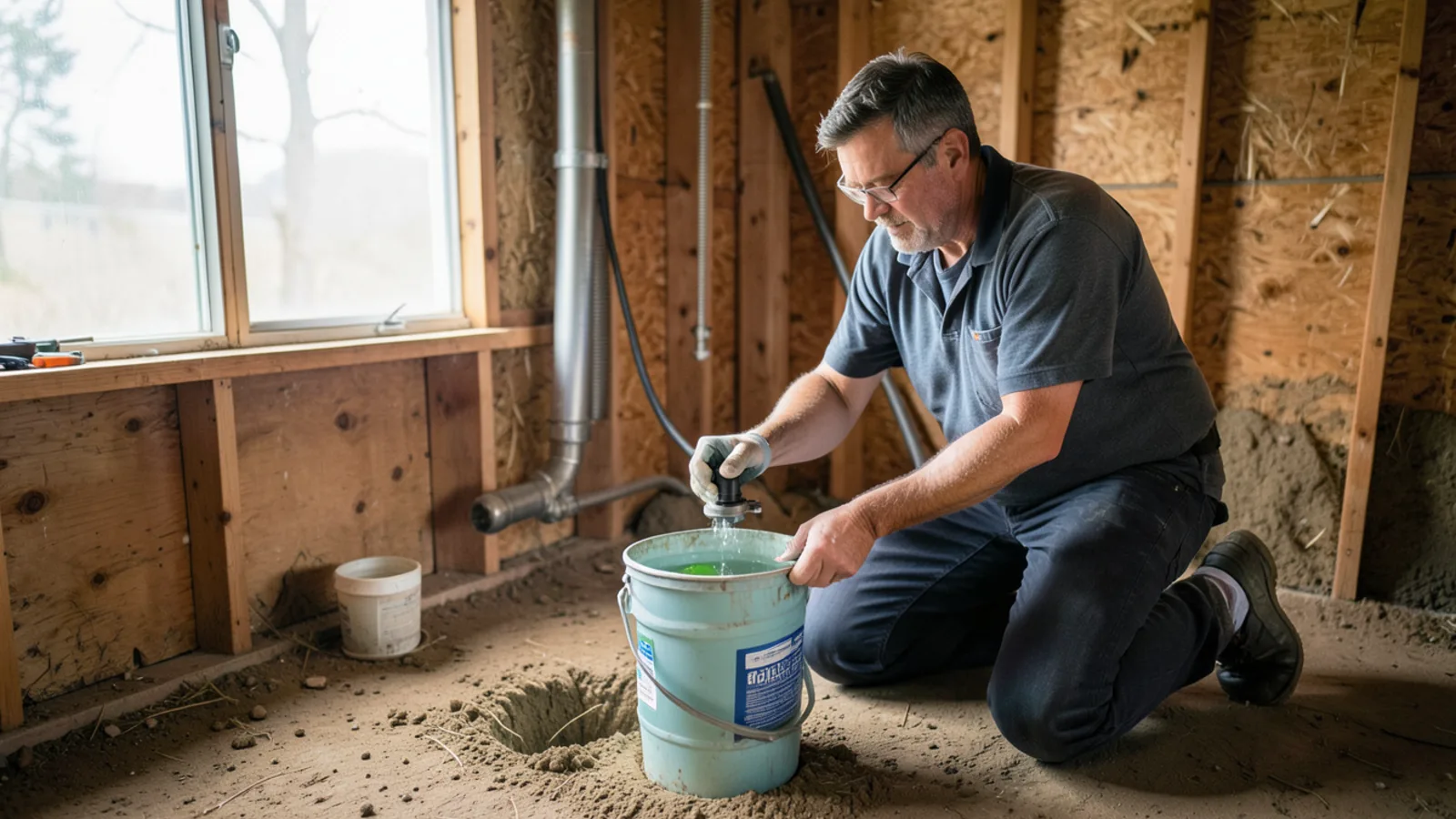
Quick summary: Lebanon County spring sump pump checklist
Before spring snowmelt and seasonal rainfall saturate the limestone aquifers of the Lebanon Valley, every homeowner should perform a rapid mechanical audit of their basement sump pump system.
Here is the essential late-winter pre-flight checklist:
• Visual Pit Clearance: Clear mud, gravel, and construction sediment from the sump basin bottom.
• Float Switch Freedom: Verify the vertical or tethered float travels smoothly without snagging cords or basin walls.
• 5-Gallon Bucket Test: Pour clean water into the pit to verify automatic pump motor startup and complete evacuation within fifteen seconds.
• Check Valve Inspection: Listen for the definitive closing thud and confirm no standing water flows backward into the pit.
• Airlock Weep Hole Check: Confirm a 3/16-inch weep hole is drilled in the discharge pipe below the check valve to prevent airlock.
• Exterior Discharge Clearance: Verify the outdoor discharge line extends at least ten feet from the foundation and is free of snow dams or ice plugs.
• Backup Battery Test: Disconnect primary AC power to verify that the auxiliary DC battery backup system engages immediately.
If your pump hums without moving water, cycles repeatedly, or fails to engage, contact Dale Hostetter and our Cumberland Street plumbing team at (207) 419-2600 for prompt inspection.
Experiencing this issue in your Lebanon County home?
Call (207) 419-2600 to speak directly with our Cumberland Street plumbing team.
Why early spring is the danger zone for Lebanon Valley basements
February, March, and April in Lebanon County mark the convergence of two powerful hydrological events: rapid thawing of frozen winter snowpacks and intense seasonal rainfall. National Oceanic and Atmospheric Administration (NOAA) climate records indicate the Lebanon Valley receives an average of 46.4 inches of precipitation annually, with significant runoff concentrated during the early spring thaw.
The geology of Lebanon County complicates this runoff. The valley floor rests on deep carbonate limestone and dolomite formations known as karst terrain. In early spring, topsoil becomes completely saturated, causing the subterranean groundwater table to surge upward toward the ground surface.
Hydrostatic pressure mounts against basement foundation walls and beneath concrete basement floor slabs. Water follows the path of least resistance, seeking out cold-pour joints between the footer and floor slab, hairline shrinkage cracks, and unsealed perimeter gaps. If your sump pump has sat dormant throughout the freezing winter and fails to start during a heavy spring storm, three to six inches of groundwater can flood your finished basement in under two hours.

Step-by-step five-gallon bucket test protocol
Never assume a sump pump is working simply because you hear it hum. A pump motor can run while its impeller is jammed or stripped, moving zero water. Simulating a real groundwater surge with a five-gallon bucket test is the only reliable verification method:
1. Basin Access and Sediment Inspection: Carefully remove the bolt-down or friction-fit basin lid. Using a bright flashlight, look into the bottom of the basin. Limestone groundwater often carries fine clay and stone silt into the pit through perimeter French drains. Clear any gravel, lint, or debris that could block the pump intake screen.
2. Controlled Water Introduction: Slowly pour five gallons of water directly into the basin, aiming away from the pump motor housing. Watch the mechanical float switch closely as the water level rises.
3. Float Switch Mechanics: The float must glide upward freely along its guide rod. It should never catch on electrical power cords, internal discharge pipes, or the textured wall of the basin. The switch should trigger the pump motor once water reaches six to eight inches above the pit bottom.
4. Evacuation Velocity: A healthy 1/3 HP or 1/2 HP cast-iron pump (such as a Zoeller M53) should evacuate the five gallons of water in less than ten to twelve seconds. The motor should shut off cleanly once water drops to the low-water cutoff line without continuous cycling.
Verifying the check valve and airlock weep hole
A functioning pump relies on two small but critical plumbing components: the inline check valve and the anti-airlock weep hole.
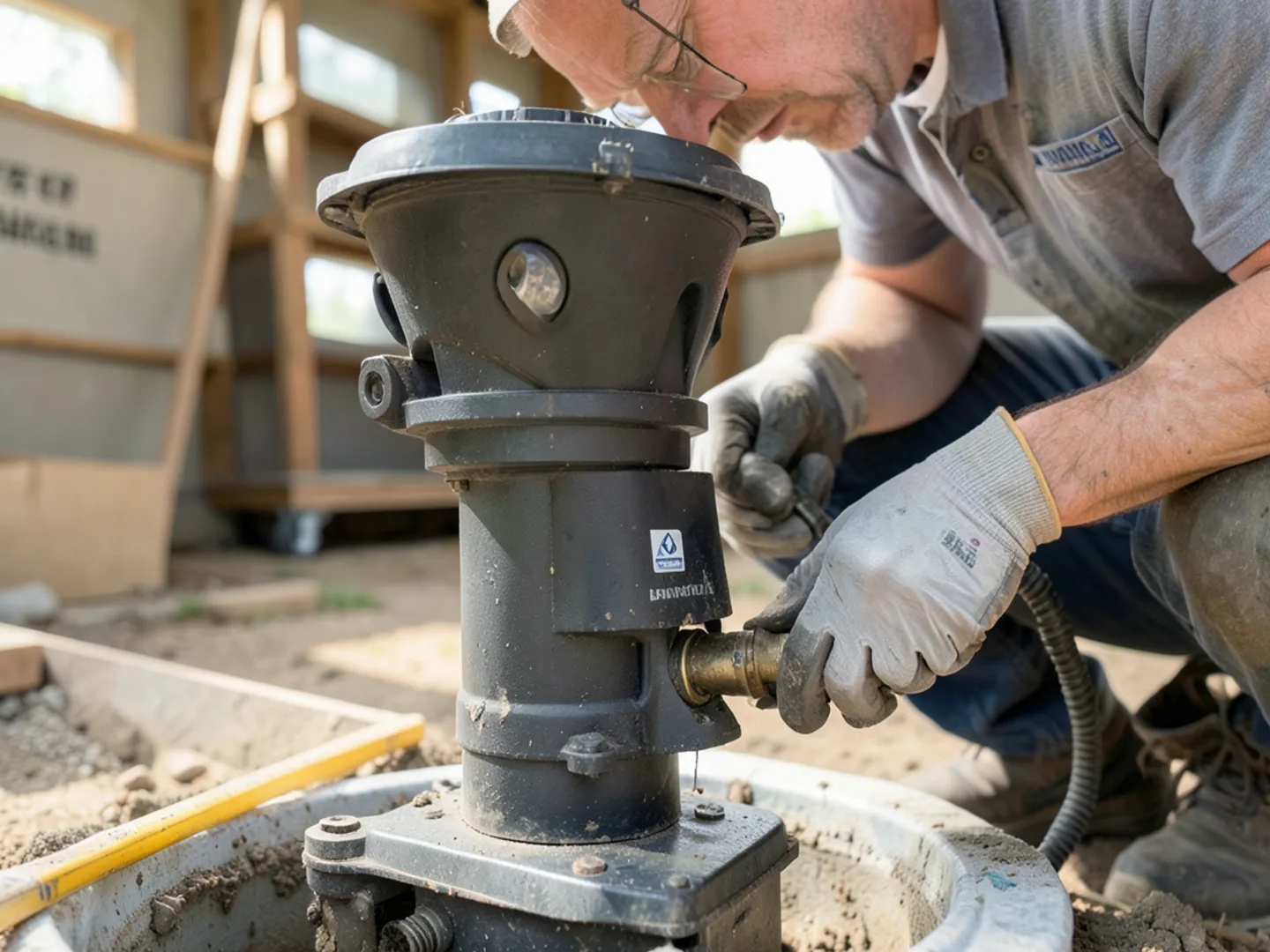
The check valve is a spring-loaded or weighted rubber flapper valve installed on the vertical Schedule 40 PVC discharge pipe directly above the sump basin. When the pump shuts off, the column of water standing in the vertical discharge pipe (often weighing ten to twenty pounds) attempts to fall backward under gravity. The check valve snaps shut, preventing this wastewater from dumping back into the pit. If you hear water splashing backward into the pit or the pump restarts every twenty seconds, the check valve flapper is warped or encrusted in mineral scale and must be replaced.
Equally important is the anti-airlock weep hole. When a sump pit empties completely, air fills the pump volute casing. When the pit refills, this air pocket can become trapped under the closed check valve flapper, creating an airlock that prevents the impeller from pushing water upward. A 1/8-inch to 3/16-inch hole drilled at a 45-degree downward angle into the discharge pipe between the pump nozzle and the check valve allows trapped air to vent into the pit, ensuring immediate water flow.
Exterior discharge line routing and municipal code compliance
Evacuating water from your basement achieves nothing if the exterior discharge line dumps the water directly against your home exterior foundation wall.
Trace your discharge pipe to where it penetrates the exterior band joist or foundation wall. Verify the following safety conditions:
• Minimum Distance: The discharge point must terminate at least ten to fifteen feet away from the foundation, sloping consistently downward toward natural lawn drainage swales or an approved rain garden.
• Winter Ice Blockages: In early spring, residual snowdrifts and sub-freezing night temperatures often create thick ice dams at the discharge pipe outlet. If the pipe is frozen solid, pumped water has nowhere to go, causing the pump motor to burn out against deadhead pressure.
• North Lebanon Township Municipal Authority (NLTMA) Compliance: Under NLTMA Chapter 26 and local borough ordinances, it is strictly illegal to connect sump pump discharge lines into the sanitary sewer system or basement laundry sinks. Diverting clean groundwater into municipal sanitary sewers overwhelms regional wastewater treatment facilities during storms, resulting in heavy municipal fines. Sump discharge must flow to outdoor grade or approved storm sewer infrastructure.
Testing and maintaining your battery backup system
Severe spring weather systems in Lebanon County frequently bring high winds, lightning, and falling tree branches that sever utility electrical power grids. Relying exclusively on an AC-powered primary sump pump leaves your home completely vulnerable during the exact hours when rainfall is heaviest.
Every finished basement should be protected by a dedicated 12-volt DC battery backup sump pump system paired with an AGM (Absorbent Glass Mat) deep-cycle marine battery. To test your backup system:
1. Unplug the primary pump AC power cord from the wall outlet.
2. Lift the float switch of the secondary backup pump manually or pour another five gallons of water into the basin.
3. Confirm that the backup pump starts immediately and that the charging panel audible alarm sounds.
4. Inspect battery terminals for white lead-sulfate corrosion, cleaning terminals with a wire brush and applying protective dielectric grease.
5. Test battery voltage with a digital multimeter. A fully charged AGM battery should read at least 12.6 to 12.8 volts under no-load conditions. Lead-acid and AGM batteries older than three to five years should be proactively replaced before spring storms hit.
Frequently asked questions about spring sump pump maintenance
Q: How long does a quality cast-iron sump pump typically last in Lebanon County?
A: A commercial-grade cast-iron sump pump (such as a Zoeller M53 or M98) typically lasts between 7 and 10 years under normal residential operating conditions. Units operating in high groundwater areas with frequent cycling may require replacement every 5 to 7 years. Budget plastic or thermoplastic pumps often fail in 3 to 5 years.
Q: Why does my sump pump run continuously even when it is not raining?
A: In the karst geology of North Lebanon Township, underground limestone conduits can channel subterranean aquifer water beneath your basement floor for weeks after snow melts. However, continuous running can also signal a stuck mechanical float switch, a broken check valve that recirculates water, or a clogged weep hole.
Q: Can I plug my sump pump into a standard extension cord?
A: No. Sump pumps draw high startup electrical amperages (often 10 to 15 amps). Using an undersized extension cord causes voltage drops that overheat the pump motor and presents a serious electrical fire hazard. Sump pumps must be plugged directly into a dedicated GFCI electrical outlet installed near the basin.
Q: What should I do if my sump pump fails during an active storm?
A: If your primary pump fails and water is rising, immediately check the electrical breaker panel to see if the circuit tripped. If the motor hums but does not pump, gently tap the discharge pipe to clear potential airlock. If the pump does not respond, call our emergency dispatch line at (207) 419-2600 immediately for priority emergency replacement.
Field documentation & reference photos

Related Plumbing Services & Locations
Need professional plumbing repair or advice?
Call our North Lebanon plumbers directly at (207) 419-2600 for upfront pricing.