Fixing running, leaking, or rocking toilets in North Lebanon
Stop continuous tank running, eliminate rocking porcelain, and prevent subfloor water damage with professional toilet repair and replacement across North Lebanon Township. Operating from Cumberland Street, our technicians rebuild failing internal valves, reset broken wax seals, and install high-efficiency WaterSense toilets with upfront flat pricing. Dispatched directly from our Cumberland Street shop in Lebanon County with upfront flat quotes and prompt local arrival.
What professional toilet repair includes across North Lebanon Township
A malfunctioning toilet causes persistent annoyance, wastes hundreds of gallons of treated water daily, and threatens subterranean ceilings and subfloors with unsanitary wastewater leaks. Operating directly from our Cumberland Street facility in downtown Lebanon, our licensed technicians resolve residential toilet issues quickly and cleanly using commercial-grade brass and silicone replacement components.
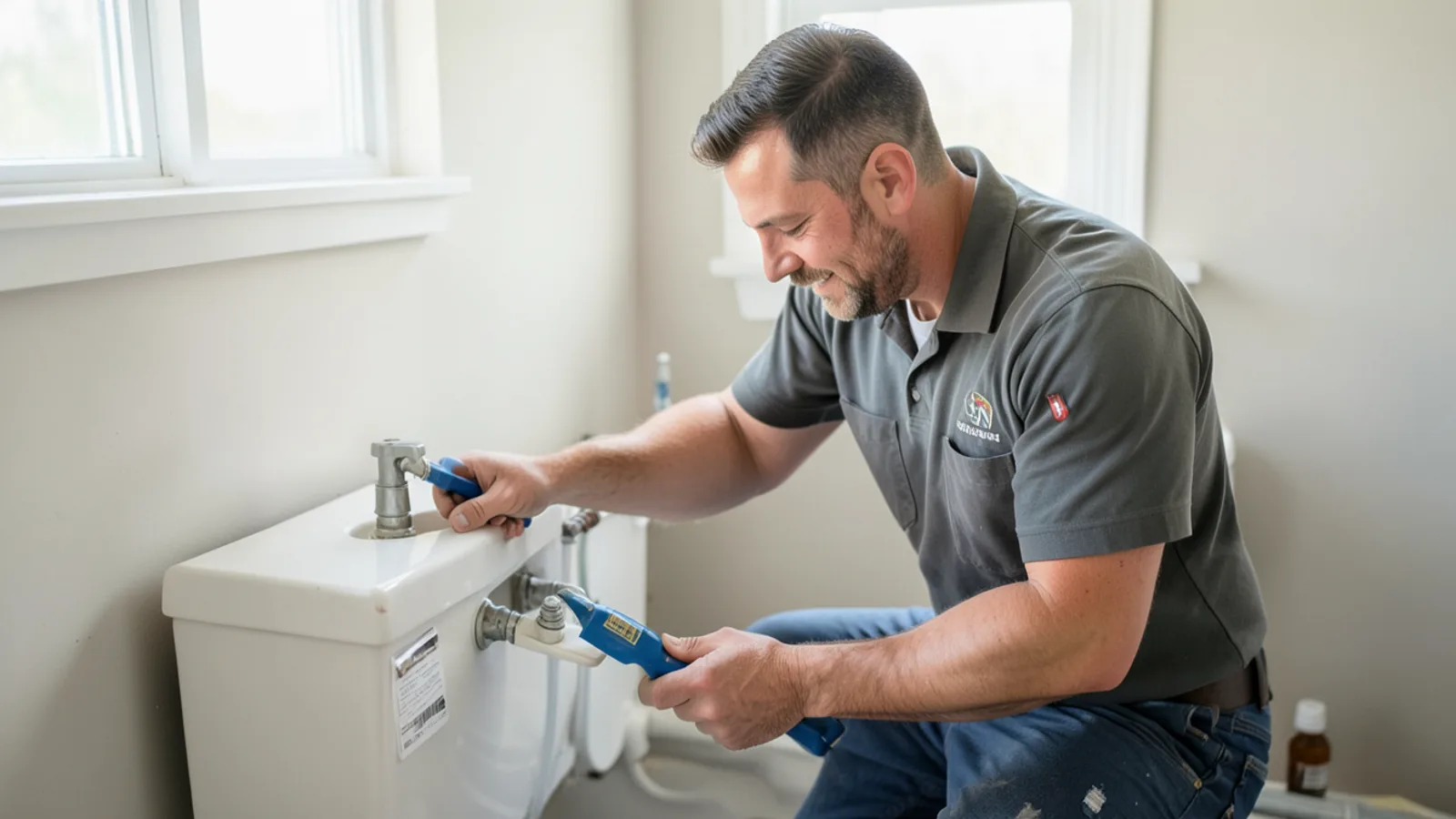
Our toilet repair and installation platform encompasses six critical mechanical scopes: complete internal tank rebuilds featuring heavy-duty Fluidmaster PRO45B fill valves and chemical-resistant silicone flappers; diagnosis and resolution of phantom flushing caused by warped flush valve seats; toilet unseating, subfloor inspection, and structural closet flange reconstruction using stainless steel repair rings; leak-free reset installations utilizing extra-thick reinforced wax gaskets with integral polyethylene horns; braided stainless steel supply line replacements and brass quarter-turn ball angle stops; and precision installation of modern EPA WaterSense certified 1.28 GPF high-efficiency toilets (such as Kohler, American Standard Cadet Pro, and Toto Drake models). Every repair visit begins with an on-site mechanical evaluation and a flat upfront written quote before work begins.

Common toilet malfunctions: phantom flushes, running tanks, and rocking bowls
Residential toilets operate under constant water pressure, cycling thousands of times each year. In North Lebanon Township, hard limestone tap water carrying dissolved calcium carbonate accelerates mechanical component fatigue. Mineral scale encrusts rubber flapper hinges, fills microscopic pores on flush valve seats, and clogs tiny rim jets.
One of the most widespread complaints is phantom flushing, where a toilet spontaneously refills for four to five seconds without anyone touching the handle. This occurs when water slowly seeps past a degraded flapper into the bowl, dropping the tank level until the fill valve float triggers water replenishment. Running toilets can waste 200 to 300 gallons of potable water daily, substantially inflating utility bills from the City of Lebanon Authority or Pennsylvania American Water Company. Rocking bowls indicate damaged closet bolts or broken flanges beneath the porcelain, which immediately breaks the sanitary wax barrier.
Need toilet repair & replacement in North Lebanon Township?
Call (207) 419-2600 to discuss your plumbing repair with our Cumberland Street team.
Wax ring failures, broken closet flanges, and subfloor rot
Water pooling around the base of a toilet bowl is never a minor issue that can be solved with exterior silicone caulk. When a toilet rocks because of uneven tile, settling joists, or corroded closet bolts, the malleable wax seal underneath fractures. Because wax has zero elastic memory, once compressed or dislodged, it cannot re-seal.
Every time the toilet flushes, wastewater containing human waste and harmful bacteria forces its way across the bathroom subfloor beneath the porcelain skirt. Over months, this moisture rots wooden subflooring, rusts cast-iron drain collars, damages ceilings in rooms below, and allows sewer gas odors to enter the bathroom. Our Cumberland Street plumbers pull the toilet, inspect the wooden framing and closet flange, secure stainless steel spanner rings to anchor bolts firmly, and install heavy-duty reinforced wax seals with discharge horns that guide wastewater safely into the waste stack.

Upgrading to modern 1.28 GPF WaterSense toilets
If your home contains vintage toilets installed prior to the 1994 Energy Policy Act, your fixtures consume between 3.5 and 5.0 gallons of water per flush. In addition, decades of exposure to Lebanon Valley limestone water causes calcified scale to choke internal siphon jets and rim wash holes, resulting in weak, swirling flushes that require multiple attempts to clear waste.
Upgrading to a modern WaterSense certified high-efficiency toilet reduces flushing water consumption by over sixty percent (consuming just 1.28 gallons per flush) while providing dramatically superior flushing power. Modern fixtures feature extra-large 2-1/8-inch fully glazed trapways, wide 3-inch flush valves, and engineered rim jets that produce a powerful vacuum siphon. We install comfortable comfort-height (chair-height) models with quiet-close seats, hauling away and recycling your old heavy porcelain fixture.
Our 6-step toilet rebuild and installation procedure
Our Cumberland Street plumbing team executes a disciplined 6-step procedure for every toilet repair and installation across North Lebanon Township.
Step 1: We conduct a diagnostic flush test, inspecting the tank water line, checking the condition of the fill valve, and checking for bowl stability on the finished floor. Step 2: We isolate the supply stop valve, sponge the tank and bowl completely dry, disconnect the braided water line, and carefully unbolt the porcelain bowl from the floor. Step 3: We scrape clean the old wax residue from the floor and closet flange, evaluating the collar for cracks, rust, or loose anchoring into the subfloor. Step 4: We repair the closet flange using a heavy-gauge stainless steel repair ring, securing it directly into solid subflooring with structural screws and installing solid brass closet bolts. Step 5: We seat a new extra-thick wax ring with an engineered funnel horn onto the flange, lower the toilet bowl into place, compress the wax seal under steady body weight, check level in both directions, and secure the brass closet bolts with protective plastic caps. Step 6: We install a high-pressure commercial fill valve and chlorazone flapper, connect a new braided stainless steel supply line to a full-port brass quarter-turn stop valve, fill the tank, calibrate water level, and perform multiple dye-test flushes to confirm a 100% watertight seal.
Cost factors for toilet repair in North Lebanon
The total investment for toilet repair depends on the mechanical failure mode: replacing an internal fill valve, flapper, and supply line is a quick, economical service. In contrast, resetting a rocking toilet that requires rebuilding a broken cast-iron closet flange or reinforcing water-damaged subflooring involves additional carpentry and pipefitting labor.
If you elect to replace an old, inefficient toilet with a new high-efficiency model, pricing includes removing and environmentally recycling the old fixture, supplying the new bowl, tank, and soft-close seat, and installing all new mounting hardware. We inspect your fixture layout in person and present a clear, flat upfront written quote with zero hidden trip fees.
Plumbing codes, ASME standards, and water conservation rules
All toilet installations and repairs performed by our technicians adhere strictly to the Pennsylvania Uniform Construction Code (34 Pa. Code Ch. 403) and International Plumbing Code (IPC) Chapter 4. Under IPC Section 420, water closets must be set on approved closet flanges firmly anchored to the building structure, with a minimum 15-inch clearance from the center of the toilet to any side wall or vanity.
Additionally, code mandates that all replacement toilets comply with ASME A112.19.2 standards and maximum water consumption limits of 1.28 gallons per flush. Sinking caulk around the base must leave an uncaulked gap at the rear of the bowl, allowing any future wax seal failure to drain visibly onto the tile rather than trapping hidden wastewater beneath the floor. Our master plumbers install fixtures to exact code standards.
Why North Lebanon property owners trust our Cumberland Street team
Resolving toilet leaks and mechanical failures demands master plumbing craftsmanship, heavy-duty commercial replacement components, and clean workmanship. Operating directly from our facility at 623–627 Cumberland Street along Route 422, our service vans assist property owners throughout North Lebanon Township, Cleona, Annville, and Palmyra.
We are registered Pennsylvania home improvement contractors (PA HIC #PA-184920) led by Master Plumber Dale Hostetter. We avoid cheap retail plastic hardware, installing commercial brass and silicone parts engineered for decades of trouble-free flushing. Backed by upfront written quotes, solid workmanship warranties, and clean drop-cloth protection, we restore sanitary, reliable bathroom plumbing you can trust.
Job site documentation & mechanical procedures


Frequently asked questions about toilet repair & replacement
Local Pennsylvania code, diagnostic methods, and service details.
Need immediate help with toilet repair & replacement?
Speak directly with our North Lebanon plumbing specialists at (207) 419-2600.