Restoring balanced water pressure to your faucets and showers
Restore strong, balanced water flow and protect plumbing fixtures from violent pressure surges with professional water pressure repair across North Lebanon Township. Operating from Cumberland Street, our technicians diagnose weak flow, replace failed Pressure Reducing Valves (PRVs), and balance domestic systems with upfront flat pricing. Dispatched directly from our Cumberland Street shop in Lebanon County with upfront flat quotes and prompt local arrival.
What professional water pressure repair includes across North Lebanon Township
Unbalanced water pressure causes daily frustration and threatens plumbing fixtures with premature mechanical failure. Whether your morning shower has diminished to an anemic trickle or violent water hammer thuds through walls when faucets shut off, our technicians resolve domestic pressure and volume discrepancies. Operating directly from our facility at 623–627 Cumberland Street in downtown Lebanon, our licensed plumbers balance residential water flow with precision trade expertise.
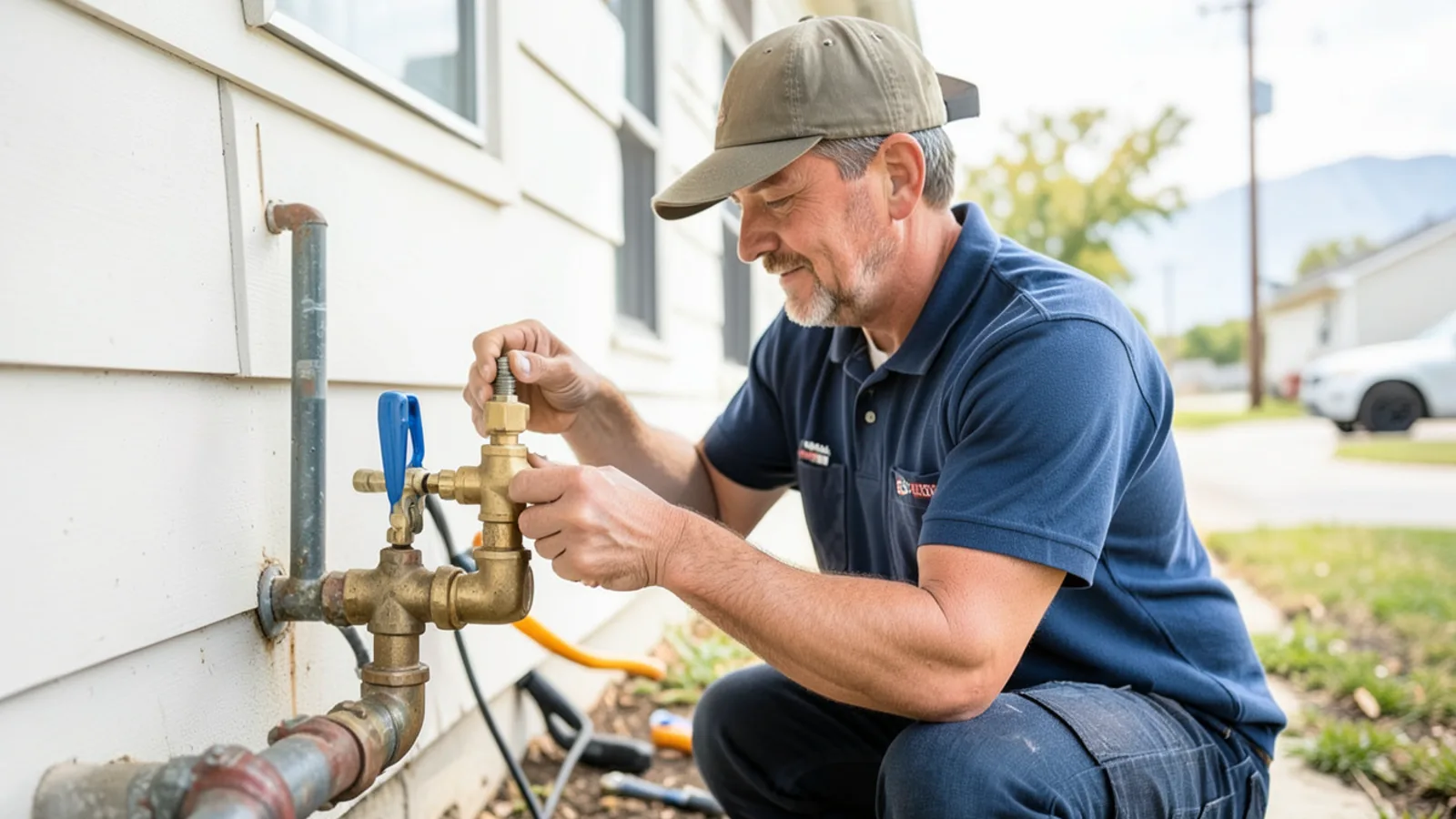
Our water pressure repair platform encompasses six critical diagnostic and mechanical scopes: dynamic and static water pressure testing using calibrated liquid-filled test gauges attached to multiple plumbing zones; precision replacement of failed, stuck, or weeping Pressure Reducing Valves (PRVs) using commercial lead-free models (such as Watts LF25AUB-Z3 and Wilkins 70XL); thermal expansion tank installation and pre-charge pressure calibration to cushion thermal expansion in closed plumbing loops; whole-home volume restriction diagnosis (identifying choked galvanized piping, partially closed curb stops, or clogged whole-house water filter cartridges); localized fixture cartridge, aerator, and pressure-balancing shower spool rebuilds to eliminate mineral scale restrictions; and installation of commercial-grade stainless steel water hammer arrestors to absorb destructive hydraulic shock waves. Every diagnostic visit begins with an on-site pressure evaluation and a flat upfront written quote before work begins.

Weak trickles versus destructive pressure surges in Lebanon County
Residential water pressure issues fall into two distinct mechanical categories: inadequate pressure and volume that makes running multiple fixtures impossible, and dangerously high water pressure that stresses pipe fittings and blows out appliance valves.
Under the International Plumbing Code, the ideal operating pressure range for residential fixtures is between 50 and 65 PSI (pounds per square inch). When domestic pressure drops below 40 PSI, showerheads lose velocity, garden hoses barely spray, and washing machines take excessive time to fill. Conversely, when pressure exceeds 80 PSI, destructive hydrostatic forces fatigue toilet fill valves, cause dripping water heater relief valves, stress flexible washing machine hoses, and generate violent metallic water hammer banging whenever solenoid valves snap shut.
Need water pressure repair in North Lebanon Township?
Call (207) 419-2600 to discuss your plumbing repair with our Cumberland Street team.
Why municipal water pressures in the Lebanon Valley exceed safe limits
Municipal water distribution networks operated by the City of Lebanon Authority and Pennsylvania American Water must maintain elevated pressures—frequently ranging between 90 and 140 PSI at street mains—to supply ridgeline neighborhoods, industrial facilities, and municipal fire hydrants.
Because this utility pressure exceeds the 80 PSI safe threshold for residential plumbing systems, homes require a dedicated Pressure Reducing Valve (PRV) installed on the primary water service line immediately downstream of the municipal water meter. PRVs contain a heavy-duty internal bronze spring, rubber diaphragm, and stainless steel strainer screen that mechanically step high street pressure down to a safe, constant 55 to 60 PSI across your home.

Why pressure regulators fail: diaphragms, scale, and spring fatigue
Like any mechanical valve containing moving rubber and metal parts, pressure reducing valves experience wear over an average service life of ten to fifteen years. In the Lebanon Valley, dissolved limestone minerals accelerate PRV deterioration by encrusting the internal bypass orifice with calcium scale.
When a PRV fails, it typically exhibits one of two failure modes. If the internal rubber diaphragm tears or the regulator stem seizes open, unrestricted municipal pressure surges directly into domestic plumbing, spiking water pressure to 120 PSI or higher. If the internal spring rusts through or the intake strainer clogs with water main sediment, the valve sticks closed, choking water volume throughout the entire house. Testing the regulator with a calibrated pressure gauge provides immediate confirmation of valve health.
Our 6-step water pressure diagnostic and restoration procedure
Our Cumberland Street plumbing team executes a disciplined 6-step procedure for every water pressure service call across North Lebanon Township.
Step 1: We attach calibrated liquid-filled pressure gauges to exterior hose bibbs and laundry connections, measuring static baseline pressure with no fixtures running. Step 2: We open multiple downstream faucets simultaneously to measure dynamic pressure drop and flow volume, determining whether the problem is true pressure loss or volume restriction caused by choked galvanized pipes. Step 3: We inspect the municipal water meter, check the alignment of the main curb stop valve, and test the pressure differential across any whole-house filtration cartridges or water softeners. Step 4: If testing indicates a failed PRV, we isolate the water main, cut away the defective regulator, and install a premium lead-free brass valve equipped with union connections and an integrated bypass feature for thermal expansion. Step 5: We calibrate the new PRV adjustment bolt to exactly 55 to 60 PSI using a live pressure gauge, verifying steady pressure during both static hold and dynamic full-flow fixture operation. Step 6: We inspect the water heater thermal expansion tank, checking air bladder pressure with a tire pressure gauge and pumping it to match the newly established 60 PSI baseline, ensuring complete closed-loop thermal protection.
Cost factors for water pressure repair in North Lebanon
The total investment for resolving water pressure issues depends on the root mechanical cause: replacing a standard residential pressure reducing valve with union connections is an economical, straightforward service. If the valve is located in an inaccessible crawlspace or requires repiping around old corroded fittings, mechanical labor is adjusted accordingly.
If testing reveals that low pressure is not caused by a regulator, but rather by internal mineral corrosion choking 70-year-old galvanized water lines, our technicians provide itemized options ranging from targeted branch replacements to whole-home PEX repiping. We evaluate your system layout in person and present a clear, flat upfront written quote before turning a wrench.
Plumbing codes, IPC 604.8 mandates, and thermal expansion compliance
All water pressure adjustments and regulator installations comply strictly with the Pennsylvania Uniform Construction Code (34 Pa. Code Ch. 403) and International Plumbing Code (IPC) Section 604.8. Under IPC Section 604.8, whenever static municipal water supply pressure exceeds 80 PSI, an approved pressure reducing valve equipped with a strainer must be installed to protect domestic piping and appliances.
Additionally, under IPC Section 607.3, installing a pressure reducing valve creates a closed plumbing system because the regulator internal check mechanism prevents heated water from expanding back into the municipal main. When a PRV is installed or replaced, code mandates that an ASME-rated thermal expansion tank be installed on the cold supply line feeding the water heater. We ensure that both the pressure reducing valve and the thermal expansion tank are properly calibrated together to protect your home.
Why North Lebanon property owners trust our Cumberland Street team
Accurately diagnosing water pressure discrepancies requires precision trade instruments, deep familiarity with local utility pressure dynamics, and master plumbing craftsmanship. Operating directly from our facility at 623–627 Cumberland Street in downtown Lebanon, our service vans assist property owners throughout North Lebanon Township, Cleona, Annville, and Palmyra.
We are registered Pennsylvania home improvement contractors (PA HIC #PA-184920) led by Master Plumber Dale Hostetter. We avoid temporary quick fixes, installing only commercial-grade brass regulators engineered for long-term reliability. Backed by upfront written quotes, solid workmanship warranties, and clean drop-cloth protection, we restore strong, dependable water flow you can rely on.
Job site documentation & mechanical procedures


Frequently asked questions about water pressure repair
Local Pennsylvania code, diagnostic methods, and service details.
Need immediate help with water pressure repair?
Speak directly with our North Lebanon plumbing specialists at (207) 419-2600.